

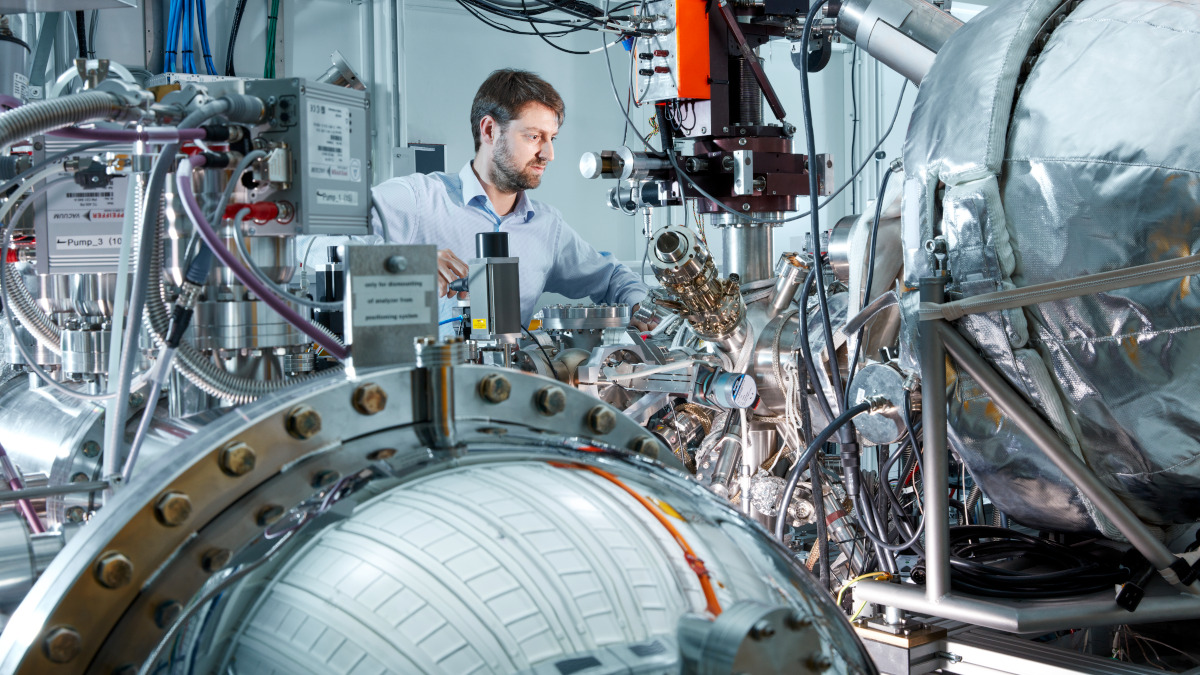
When people hear the name DESY, they think of basic research. And that is what the German Electron Synchrotron, DESY, with its sites in Hamburg and Zeuthen near Berlin, is known for worldwide. Researchers from Germany and abroad use extremely intense, focused X-ray light – known as synchrotron radiation – to analyze the smallest building blocks of matter or identify potential targets for innovative new drugs.
Founded in December 1959 and publicly funded, the research center, which is part of the Helmholtz Association, is now also taking the next step: its research findings are to be turned into innovative solutions for industry as quickly as possible. Closer integration of science and industry is essential to achieving this.glich.
Bridging two worlds
Dr. Falko Brinkmann has made this his mission. Starting in June, he has been DESY’s Chief Technology Officer (CTO), responsible for innovation and technology transfer. With a PhD in physics, Brinkmann knows the world of scientific research firsthand. But he also brings more than ten years of experience in consulting and industry to his new role. Among other positions, he held several innovation and strategy roles at laboratory equipment manufacturer Eppendorf and subsequently served as interim managing director of the transfer and innovation agency Hamburg Innovation GmbH. He has also founded several start-ups in the life sciences and health tech sectors.
I want entrepreneurs – from start-ups and mid-sized companies to large corporations – to think: I need to go to Science City Hamburg-Bahrenfeld. That is where I will find young talents and creative minds, but also the people who turn ideas into reality.
Dr. Falko Brinkmann
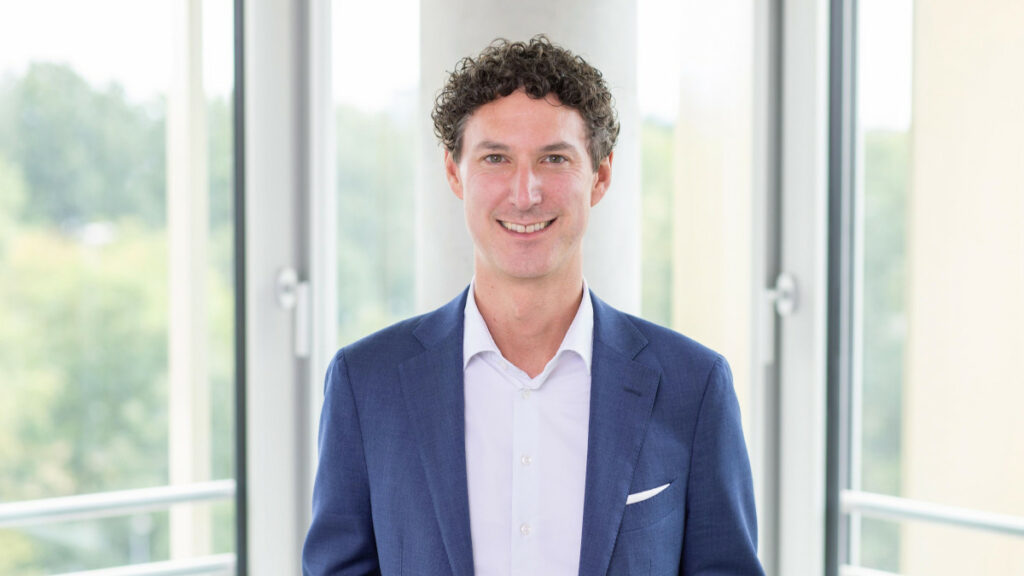
© DESY
Brinkmann sees himself not only as well prepared for the challenges ahead, but also as a bridge between two worlds: “DESY has a clear mandate to work more closely with industry. And Germany’s High-Tech Agenda has placed even greater emphasis on this. I believe that my industry experience can make a real contribution to improving the transfer of knowledge from science to industry and bringing the two sides together. After all, they often speak different languages. I’ve experienced that myself, both in research and in industry.”
The DESY campus is growing
To move research results into practical applications more quickly, DESY is developing and expanding its existing infrastructure. Funding is available from the federal government and the Free and Hanseatic City of Hamburg.
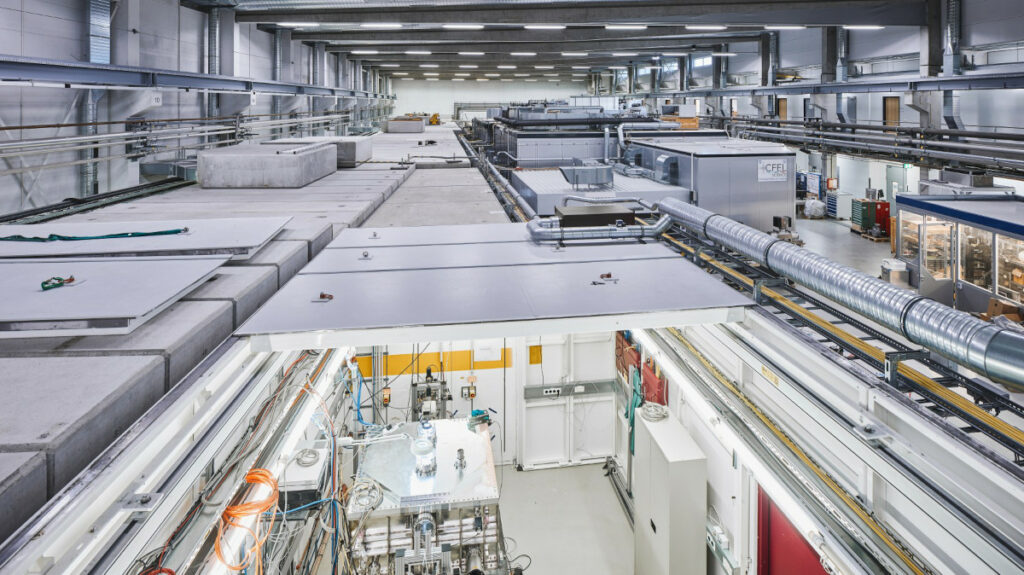
© DESY, Daniel Altrath
In May, the Biospace opened in the tecHHub in the Innovation Park Altona. It offers around 215 square meters of modern shared laboratory space, including facilities certified up to biosafety level 2, for startups, spin-offs, and research teams working on new therapeutics, diagnostics, or biomaterials. It gives them the flexibility to test their business ideas under real-world conditions, flexibly and, above all, without major upfront investment.
We take great care to ensure that the parties moving into the DESY Innovation Factory can benefit and learn from one another in the fields of materials development, quantum technology, and life sciences.
The Biospace is part of the DESY Innovation Factory. Two buildings are planned for the technology and start-up center: one is scheduled to open in the Innovation Park Altona at the end of 2026, and the other on the DESY campus in 2027. Together, they will provide more than 8,500 square meters of space designed to bring research, entrepreneurship and industry into closer contact. The aim is to create an environment where researchers, founders, start-ups and established companies interact daily, generating new ideas that they can develop together and put into practice.
Distances in Hamburg are short. People know one another. And the great thing about Science City is that all the key locations in the area are within a ten-minute bike ride.
In addition to state-of-the-art laboratories and offices, tenants will have access to measurement facilities, modern workshops, 3D printing facilities, and co-working spaces, with support from specialist staff where needed. They will also gain access to DESY’s world-class research infrastructure, including direct access to the PETRA III X-ray light source.
Making it affordable
That leaves the question of cost. DESY Innovation Factory plans to introduce a model that takes companies’ different stages of development into account. As CTO Brinkmann explains: “Start-ups have different circumstances and needs depending on their stage of development. That’s why we want to make it attractive for them to get started and allow the support we provide to grow alongside the companies. What matters is that promising deep tech companies have the right conditions to continue developing.”
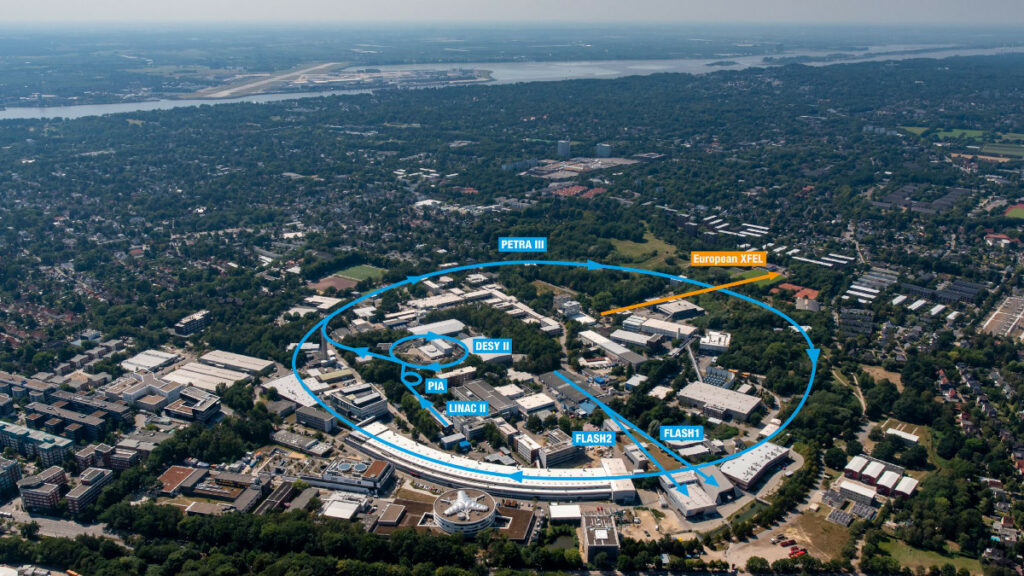
© DESY, Reimo Schaaf, Britta Liebaug
A beacon for Europe
But Science City will offer more than space for research and innovation. Housing is also planned, along with good public transit connections. The goal is for Science City to become a leading center for innovation within ten years, attracting life sciences entrepreneurs and researchers from across Europe. Even scientists who do not want to pursue careers in research should find attractive opportunities for professional development here and ways to connect with industry.
Text: Maren Kühr
Feature image: ©DESY, Heiner Müller-Elsner


